


Origins and history of Casamicciola
Origins and History of Casamicciola
At a glance
Casamicciola Terme, on the northern side of the island of Ischia, has been inhabited since the Bronze Age, as the village on the Castiglione hill shows. The name first appears in 1265. Its springs, celebrated in the 16th century, made it a European spa resort in the 19th; after 1883 the town was reborn facing the sea.
Where it is
Casamicciola Terme lies on the northern side of the island of Ischia, at the foot of Monte Epomeo, between Ischia to the east and Lacco Ameno to the west. The municipality, covering about 5.85 km², is largely hilly: from the coast, with the harbour and Piazza Marina, it climbs towards the Piazza Bagni spa quarter and the hamlets of upper Casamicciola, while to the east lies the Castiglione coastal strip.
The origins
People have frequented this area since very ancient times. On the Castiglione hill, excavations have brought to light a village of huts with features of the Apennine culture, dating from between the Middle Bronze Age and the Early Iron Age: bowls, amphorae, large basins and incised vases in which the archaeologist Giorgio Buchner recognised the skill of local potters. According to tradition, the Greek settlers who reached the island in the 8th century BC were also drawn by the hot waters of this coast. For the geological background, read The Volcanic Origins of Casamicciola.
The name
The place name is first recorded in 1265, in the form “Casamiczula”. Various theories about its origin have circulated for centuries: the physician Giulio Iasolino proposed “Casanizzola”, while a legend tells of a woman named Nisula who was healed by the local waters. None has been proven. The suffix “Terme” (spa) was added in 1956, to underline the town's vocation.
From springs to European fame
In 1588 Iasolino published in Naples his famous treatise on the island's natural remedies, in which he praised the Gurgitello as the “queen” of Ischia's thermal mineral waters. On the hills between Casamicciola and Lacco Ameno alunite was also worked to extract alum, which was carried along the old Via dei Carri (Cart Road) to the harbour of Casamicciola. In the 17th century the Pio Monte della Misericordia of Naples, whose statute was approved in 1604, opened a hospice near the Gurgitello springs to provide thermal cures for the needy: this was the beginning of the story of the Pio Monte of Casamicciola, told in The Origins of Thermal Cures and The Birth of Spa Tourism.
In the 19th century Casamicciola became a spa resort of European standing. Its guests included Alphonse de Lamartine, Henrik Ibsen, Ernest Renan and, in 1864, Giuseppe Garibaldi. Alongside the spas a long ceramics tradition developed, linked to the local clay deposits.
Rebirth towards the sea
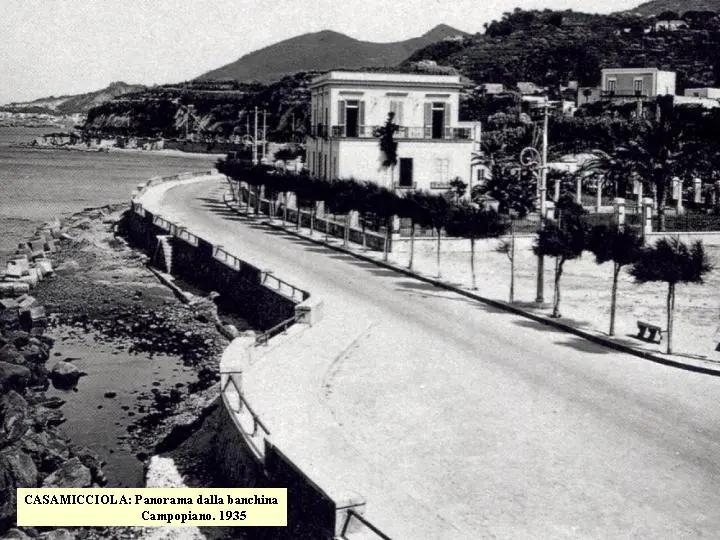
After 1883 Casamicciola renewed itself: a new building code guided the rise of new buildings, and the focus of town life gradually shifted towards the coast, where the new Pio Monte della Misericordia and the new mother church were built. This is told in Casamicciola after 1883: the rebirth.
The 20th century and today
Between 1938 and 1945 Casamicciola was merged with the municipality of Ischia, later becoming independent again. In the 1950s the island's tourism revival, promoted among others by Angelo Rizzoli, involved the historic spas of Piazza Bagni. Its harbour, the second most important on the island, remains one of Ischia's gateways. The patron saint is Saint Mary Magdalene, whose feast day is 22 July.
Frequently asked questions
Where does the name Casamicciola come from?
Why is Casamicciola called “Terme”?
Who are Casamicciola's illustrious guests?
What are the areas of Casamicciola?
Also worth seeing
Volcanic and geological history
The Volcanic Origins of Casamicciola
Casamicciola was born of Ischia's volcanoes. Around 56,000 years ago the Green Tuff eruption formed a caldera, then the Monte Epomeo block rose by…
DiscoverHistory of spa culture
The Origins of Thermal Cures in Casamicciola
Casamicciola owes its history to the hot water that rises from Ischia's volcanic subsoil. Used for healing since ancient times and documented from…
DiscoverHistory of spa culture
The Birth of Spa Tourism
Between the 17th and 19th centuries Casamicciola moved from cures for the poor, organised by the Pio Monte della Misericordia, to true spa holidays…
DiscoverHistoric spas
Pio Monte della Misericordia Complex
The Pio Monte della Misericordia complex is the old thermal hospice of Casamicciola Terme, founded in the early 17th century by the Gurgitello…
DiscoverFamous people
Alphonse de Lamartine in Casamicciola
Alphonse de Lamartine, the French Romantic poet and politician, spent about a month in Casamicciola in 1820, shortly after his wedding, in a small…
DiscoverFamous people
Giuseppe Garibaldi in Casamicciola
Giuseppe Garibaldi stayed in Casamicciola Terme for about a month in the summer of 1864, from 19 June, to treat the foot wound he had received at…
Discover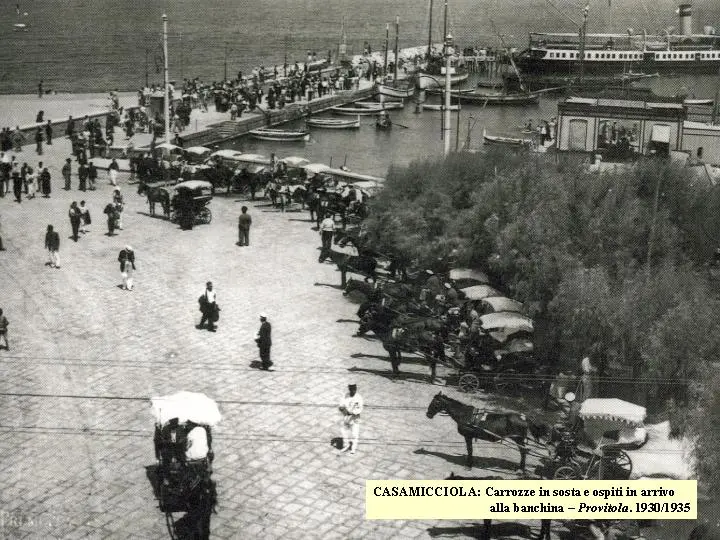
Rebirth and transformation
Casamicciola after 1883: the rebirth
After 1883 Casamicciola was reborn facing the sea. The 1884 Building Code, the first anti-seismic legislation of united Italy, introduced…
DiscoverFamous people
Angelo Rizzoli and the Manzi Baths
Angelo Rizzoli (1889–1970), the Milanese publisher and film producer, was a driving force behind Ischia's tourism revival in the 1950s. In…
Discover
Area
Piazza Bagni and the Spa Quarter
The Piazza Bagni area is the historic spa quarter of Casamicciola Terme, a short distance from the harbour on the lower slopes rising towards Epomeo…
Discover
Area
Upper Casamicciola
Upper Casamicciola is the hilly part of the town, on the northern slopes of Monte Epomeo. It includes the historic centre of Piazza Maio, the La Rita…
DiscoverArea
The Castiglione Coast
The Castiglione coastal strip is the eastern stretch of the Casamicciola Terme coastline, towards the boundary with the municipality of Ischia. Here…
Discover
Area
Piazza Marina and the Seafront
Piazza Marina and the seafront are the waterfront of Casamicciola Terme, where ferries and hydrofoils arrive and town life is concentrated. Here you…
DiscoverThermal basin
Gurgitello Thermal Basin
The Gurgitello is the main hydrothermal basin of Casamicciola Terme: around 12,000 square metres on the eastern side of Piazza Bagni, where several…
DiscoverSources and further reading
- Casamicciola Terme – Wikipedia
- Casamicciola Terme – Discover Campania
- City of Casamicciola Terme – Ischia.it
- Ischia: i bacini idrotermali di Casamicciola – Hotel La Maggioressa
- Ospizio del Pio Monte della Misericordia a Casamicciola Terme – Italia Nostra
- Il Sentiero dell'Allume – Ischia.it
- INGVterremoti – Casamicciola, 28 luglio 1883
Last updated: