


Origins and history of Casamicciola
Origins and History of Casamicciola
Casamicciola Terme, on the northern side of the island of Ischia, has been inhabited since the Bronze Age, as the village on the Castiglione hill…
Discover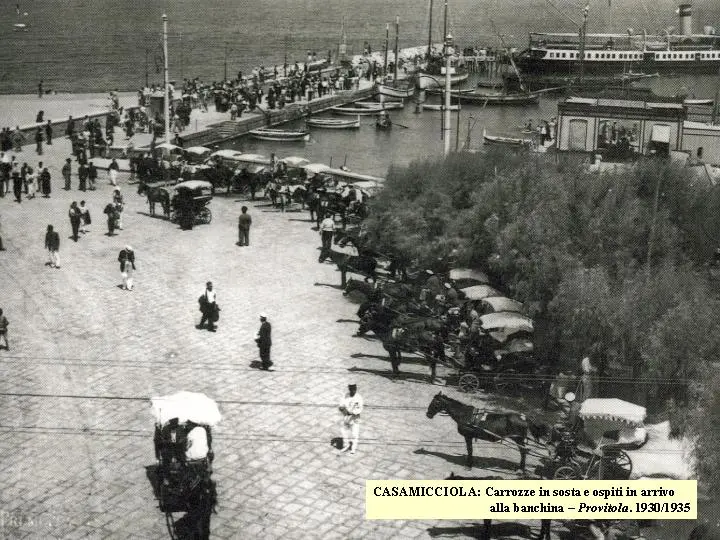
Discover Casamicciola
Thermal waters, faith, illustrious guests and rebirths: four centuries of history in a small town overlooking the Gulf.
Few places tell their story through water as Casamicciola does. The hot springs rising from the volcanic subsoil, starting with the Gurgitello spring, led to the founding here in 1604 of one of Europe’s first thermal hospices, run by the Pio Monte della Misericordia, and later, in the 19th century, to a holiday resort frequented by aristocrats, artists and writers from all over the continent.
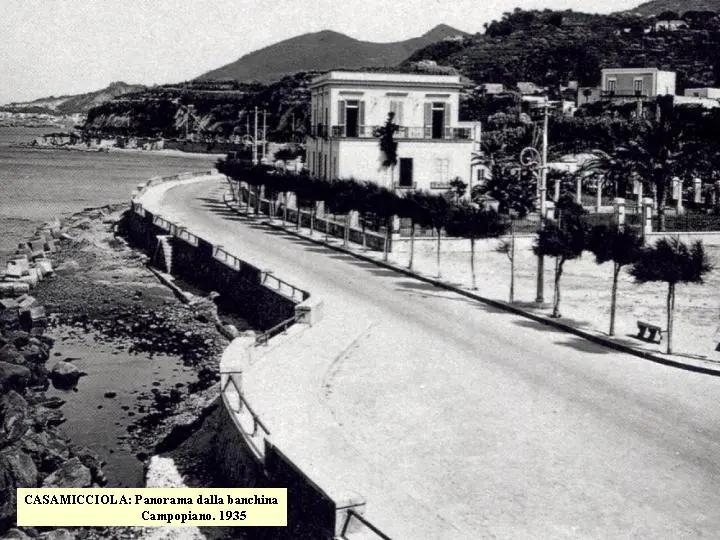
It is a community that has always known how to renew itself. After 1883 the town was reborn facing the sea: its centre moved towards the Marina, where the new Pio Monte, the new mother church and the buildings that still welcome visitors arriving from the harbour were built. In these pages you will find the churches and religious traditions, the milestones of the spa tradition, the people who loved Casamicciola and the transformations of its landscape.
To begin: the origins of thermal cures, the Pio Monte della Misericordia, the rebirth after 1883 and the Basilica of Santa Maria Maddalena, the town’s mother church.
Milestones
Thermal bathing has been practised on Ischia since the time of the Greek colonists. A legend links the town’s name to the matron Nisola, healed by its waters and depicted on the municipal coat of arms.
The Calabrian physician publishes De’ rimedi naturali in Naples, devoting great attention to the Gurgitello spring in Casamicciola.
The Neapolitan charitable institution decides to found a thermal hospice for the sick poor in Casamicciola; the first season of treatments is held in July 1605.
The spa building commissioned by Ferdinand II, today’s Antiche Terme Belliazzi, opens in Piazza Bagni. Casamicciola is a spa resort known throughout Europe.
On 19 June Giuseppe Garibaldi arrives in Casamicciola to treat the wound he received at Aspromonte with the waters of the Occhio and Gurgitello springs.
The Norwegian playwright Henrik Ibsen settles at Villa Pisani, where he presses on with writing Peer Gynt.
After 1883 Casamicciola renews itself and moves down towards the sea: the centre of town life shifts from the Piazza Maio hill to the Marina, where the town’s present-day face takes shape.
From 15 September a new building code comes into force for the island’s municipalities; at the Grande Sentinella the Geodynamic Observatory is founded, directed by Giulio Grablovitz.
The Pio Monte’s new thermal hospice opens on the seafront, leaving Piazza Bagni to look out over the gulf.
On 31 May the church of Sacro Cuore e Santa Maria Maddalena (Sacred Heart and St Mary Magdalene), commissioned by the parish priest Giuseppe Morgera, is inaugurated; it has been a minor basilica since 1965.
The publisher Angelo Rizzoli begins the purchase and revival of the Manzi Baths and Hotel in Piazza Bagni.
In recognition of its abundant thermal waters, the municipality adds ‘Terme’ (Spa) to its name.
On 17 September 2025 the Pio Monte complex became the property of the Municipality, with a restoration project that includes the Gurgitello spring.
To discover
Churches and traditions, spa history, notable figures, rebirth and science: explore the pages by theme.
Churches, faith and traditions
The church of San Gabriele dell'Addolorata, with its adjoining Passionist monastery, stands on Via Salvatore Girardi in the Perrone area. The…
DiscoverChurches, faith and traditions
The church of Santa Maria del Buon Consiglio, known as the Sailors' Church, overlooks Piazza Marina in the heart of Casamicciola. It was commissioned…
DiscoverChurches, faith and traditions
The church of Sant'Antonio da Padova, known as “al Mortito”, is the parish church of the Perrone district, near the cemetery. Founded as a private…
DiscoverChurches, faith and traditions
The church of San Pasquale Baylon, home of the Confraternity of Sant'Anna, is a small 18th-century church on Via Don Luigi Orione, in central…
DiscoverChurches, faith and traditions
The church of Santa Maria della Pietà is home to an old confraternity of fishermen and craftsmen, already active in the early 17th century. After…
DiscoverChurches, faith and traditions
The church of San Giuseppe is a 20th-century chapel, built between 1925 and 1929 and attached to the care home founded by Giuseppina Morgera, niece…
DiscoverChurches, faith and traditions
The church of the Addolorata, in upper Casamicciola between the Maio, La Rita and the Sentinella, is the same church known as the Purgatorio or Santa…
DiscoverChurches, faith and traditions
The church of Santa Maria del Suffragio, known as the Purgatorio, stands on Via D'Aloisio in upper Casamicciola, near Piazza Maio. Founded in 1693…
DiscoverChurches, faith and traditions
The sanctuary of Maria Santissima Immacolata stands at the Sentinella, in upper Casamicciola, on Via Castanito. Founded in 1703 and dedicated to the…
DiscoverChurches, faith and traditions
The basilica of the Sacred Heart of Jesus and St Mary Magdalene the Penitent is Casamicciola's mother church, on Via Roma near Piazzetta Funno…
DiscoverVolcanic and geological history
Casamicciola was born of Ischia's volcanoes. Around 56,000 years ago the Green Tuff eruption formed a caldera, then the Monte Epomeo block rose by…
DiscoverVolcanic and geological history
Casamicciola's thermal waters and fumaroles are the visible sign of the heat of Ischia's volcanic system, now dormant. The Monte Cito fumaroles…
DiscoverFamous people
Giuseppe Garibaldi stayed in Casamicciola Terme for about a month in the summer of 1864, from 19 June, to treat the foot wound he had received at…
DiscoverFamous people
Alphonse de Lamartine, the French Romantic poet and politician, spent about a month in Casamicciola in 1820, shortly after his wedding, in a small…
DiscoverFamous people
The Norwegian playwright Henrik Ibsen arrived on Ischia on 20 May 1867 and settled in Casamicciola, at Villa Pisani, where he pressed on with writing…
DiscoverFamous people
The French philosopher and historian Ernest Renan stayed in Casamicciola Terme three times, in 1875, 1877 and 1879, to take courses of thermal…
DiscoverFamous people
Giulio Grablovitz (Trieste 1846 – Ischia 1928) was the scientist called in to design and direct the Casamicciola Geodynamic Observatory, founded in…
DiscoverFamous people
Angelo Rizzoli (1889–1970), the Milanese publisher and film producer, was a driving force behind Ischia's tourism revival in the 1950s. In…
DiscoverHistory and science
La Sentinella is the hilly area of upper Casamicciola, divided into Grande and Piccola Sentinella and overlooking the gulf. After 1883 Giulio…
DiscoverHistory and science
The Geodynamic, later Geophysical, Observatory of the Grande Sentinella was established by royal decree and founded in 1884 in the upper part of…
DiscoverHistory of spa culture
Casamicciola owes its history to the hot water that rises from Ischia's volcanic subsoil. Used for healing since ancient times and documented from…
DiscoverHistory of spa culture
Between the 17th and 19th centuries Casamicciola moved from cures for the poor, organised by the Pio Monte della Misericordia, to true spa holidays…
Discover
History of spa culture
The Gurgitello is Casamicciola's most celebrated hot spring and rises in Piazza Bagni, which takes its name from it. Used since the Middle Ages and…
DiscoverHistory of spa culture
The Pio Monte della Misericordia, a Neapolitan charity founded in 1602, opened a hospice in Casamicciola from 1604 where the sick poor received…
DiscoverHistory of spa culture
In the 19th century Casamicciola became a spa resort known throughout Europe. Villas and grand hotels rose around the Piazza Bagni spas and on the…
DiscoverHistory of spa culture
On 19 June 1864 Giuseppe Garibaldi arrived in Casamicciola to treat the foot wound he had received at Aspromonte with thermal waters. He first stayed…
DiscoverHistory of spa culture
Between the late 19th century and the early decades of the 20th, Casamicciola rebuilt its spas and hotels closer to the sea. The new Pio Monte…
DiscoverHistory of spa culture
After 1883 Casamicciola was reborn facing the sea. A new building code, the first anti-seismic legislation of united Italy, guided the rise of new…
Discover